
Stainless Steel Kitchen Worktops: Pros, Cons and London Commercial Style
Why searches for stainless steel kitchen worktops keep rising in London, what they cost, and how they behave in a real home kitchen.
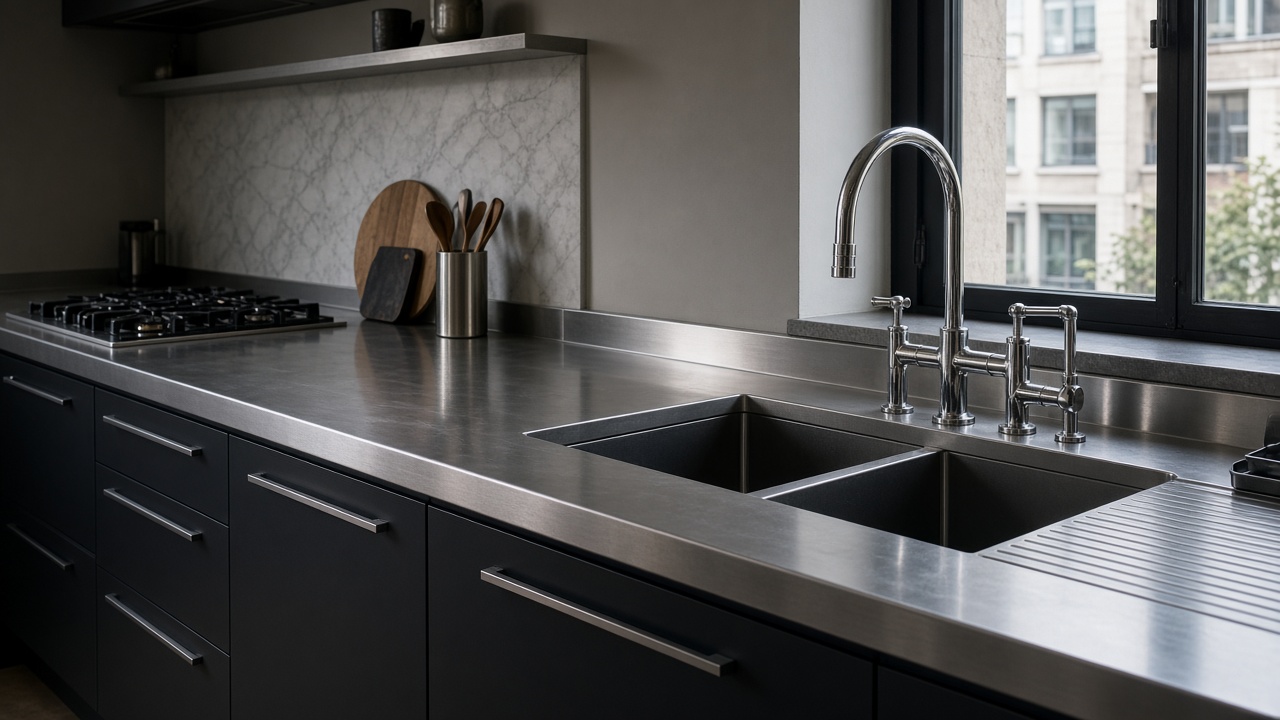
Stainless steel kitchen worktops sit at the intersection of commercial kitchen hygiene searches and industrial-loft interiors in Shoreditch, Bermondsey and canal-side warehouses. Chefs like steel because heat, bacteria and impact are straightforward. Homeowners sometimes dislike it because it shows every scratch and fingerprint.
If you want that look with fewer scratches, satin or linen-embossed grades hide wear better than mirror polish. Pairing steel at the hob with timber or stone elsewhere is a common London spec.
Contents
1 Cost and fabrication
2 Pros and cons
3 Home versus catering spec
4 Frequently asked questions
Cost and fabrication
Bespoke welded stainless tops for a domestic kitchen often land in a similar band to mid-to-high quartz once you include upstands, a drainer profile and an integrated sink — commonly £3,000–£6,000 fitted, with wide variation. Cheap folded sheets without proper support will oil-can (flex and rumble).
Pros and cons
Here are some of the most popular kitchen worktop materials:
Pros: heat from pans, hygienic welds, recyclable metal, strong commercial aesthetic. Cons: noise, cold to the touch, visible scratches that you must accept as patina, and possible reaction if you want a perfectly still, stone-like luxury feel.
Home versus catering spec
Catering steel is built for abuse and cleaning chemicals. Domestic installations should still use adequate thickness and sound-deadening. If hygiene plus a warmer feel is the goal, solid surface with an integrated sink is the other high-search option.
Frequently asked questions
Do stainless steel worktops rust?
Quality 304 or 316 stainless used in kitchens should not rust in normal use. Surface rust spots usually come from carbon steel knives left wet, or cheap pans. Remove them promptly.
Are steel worktops hygienic?
Yes — non-porous, high heat tolerant, and easy to sanitise. Welds should be continuous. They are a genuine alternative to plastic-laminate hygiene claims in rental and professional-style homes.
Next step
Ready to compare surfaces for a London kitchen? Request a quote, order a free sample, or browse the full worktop range.