
Minerva vs Corian: Which Should You Choose?
When planning a kitchen renovation, choosing between Minerva and Corian worktops is one of the most common decisions for UK homeowners comparing solid surface materials. At first glance,…
· By Kitchen Worktops Direct · 6 min read
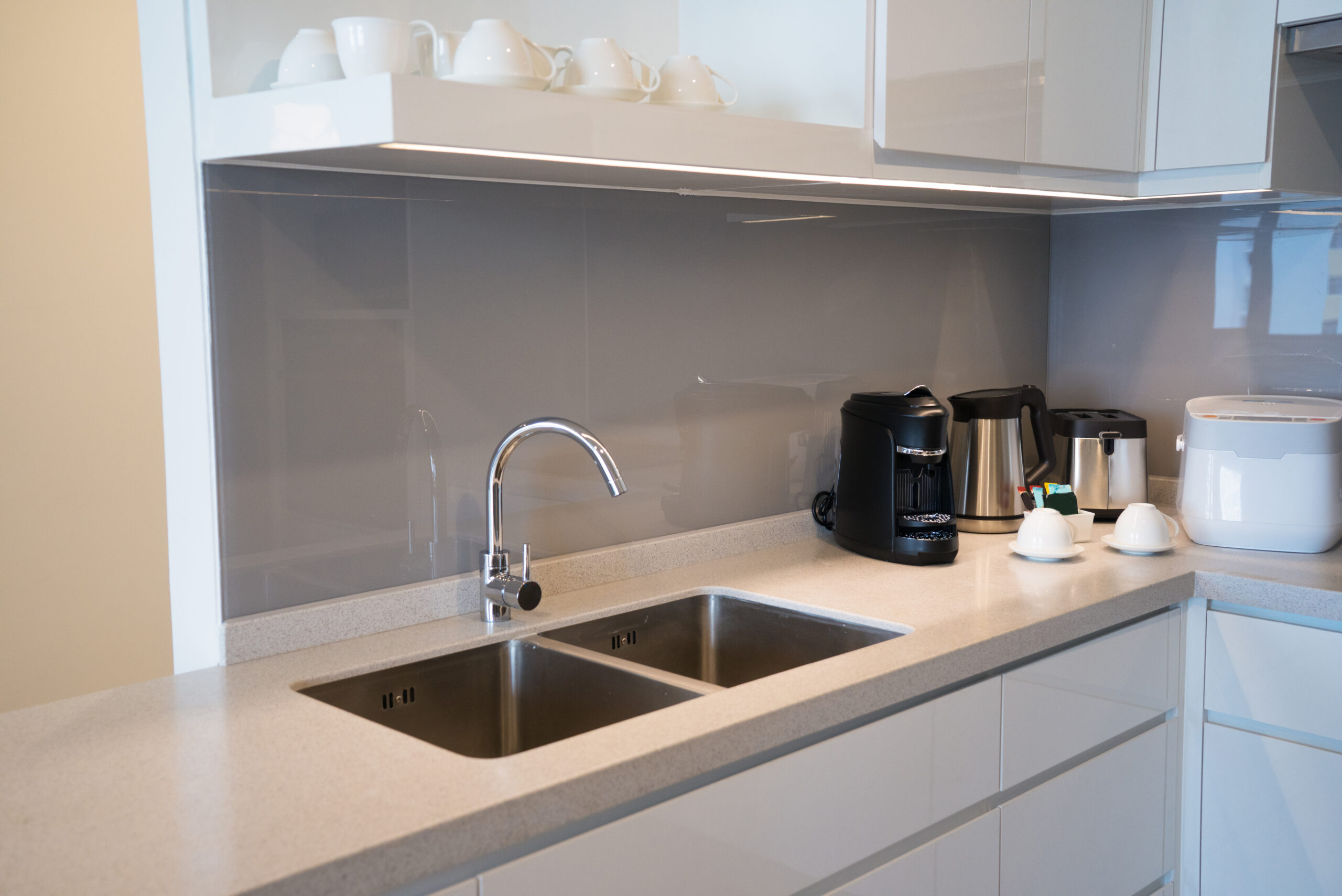
When planning a kitchen renovation, choosing between Minerva and Corian worktops is one of the most common decisions for UK homeowners comparing solid surface materials.
At first glance, they look almost identical. Both give you a smooth, seamless finish, both can be fabricated into custom shapes, and both sit in that modern “step up from laminate, below quartz” category that many UK kitchens now aim for.
But once you get into real installations, the differences between Minerva worktops vs Corian worktops start to matter — especially around finish quality, design flexibility, long-term repairability, and how each material behaves in everyday use.
This guide breaks it down using real kitchen project logic, not just brochure descriptions, so you can confidently decide which one actually suits your home, budget, and design.
Contents
1 What Is Corian?
2 What Is Minerva?
3 Minerva vs Corian Quick Comparison
4 Price Difference in Real UK Kitchens
5 Appearance and Finish Quality
6 Durability and Everyday Performance
7 Design Flexibility Comparison
8 Repairability and Long-Term Maintenance
9 Real-World Kitchen Scenarios
10 Common Mistakes Homeowners Make
11 Which One Should You Choose?
12 Final Verdict: Minerva vs Corian
13 Frequently Asked Questions
What Is Corian?
Corian is a premium solid surface material made from acrylic resin and natural minerals, widely used in bespoke kitchens and high-end interior design projects.
In real UK kitchen installs, it’s often chosen when the design goes beyond standard straight runs and starts to include islands, curves, or seamless transitions between surfaces.
Why Corian is commonly used in UK kitchens:
- Seamless joins that can be made almost invisible
- Full integration of sinks, drainer grooves, and splashbacks
- Ability to create curved or sculpted designs
- Hygienic, non-porous surface
- Can be sanded and restored even after years of use
Real-world use case:
In many modern UK open-plan kitchens, Corian is used on islands where homeowners want a continuous surface look without visible joints or breaks.
What Is Minerva?
Here are some of the most popular kitchen worktop materials:
Minerva is a solid surface worktop brand widely used across UK kitchen renovations as a more affordable alternative to Corian.
It delivers a similar seamless aesthetic, which is why it has become popular in mid-range kitchens where homeowners want a modern look without premium pricing.
Key characteristics of Minerva:
- Acrylic-based solid surface material
- Seamless appearance when properly installed
- Hygienic and easy to clean
- Compatible with integrated sinks
- More budget-friendly than Corian
Real-world use case:
Minerva is often specified in rental properties, standard kitchen refurbishments, and family homes where the priority is a clean modern finish without pushing into premium fabrication costs.
Minerva vs Corian Quick Comparison
| Feature | Corian | Minerva |
| Price range | Premium | Mid-range |
| Finish quality | High-end, refined | Clean but slightly less polished |
| Design flexibility | Excellent | Moderate |
| Colour range | Wide premium palette | More limited |
| Installation type | Bespoke fabrication | Straightforward installs |
| Repairability | Fully renewable | Limited restoration |
Price Difference in Real UK Kitchens
One of the biggest search intents behind Minerva vs Corian is understanding real installed cost, not just material pricing.
Typical installed UK prices:
- Minerva: £200 – £450 per linear metre
- Corian: £500 – £900+ per linear metre
What this means in a real kitchen:
- Minerva can reduce total project cost by £1,000–£3,000+ in a typical kitchen
- Corian increases upfront cost but adds long-term design flexibility
Real installer insight:
Most budget-led renovations start with Minerva, but some homeowners switch to Corian after seeing sample comparisons — especially when planning islands or open-plan layouts where finish quality becomes more noticeable.
Appearance and Finish Quality
At first glance, both materials look very similar, especially in neutral colours like white, cream, or grey.
But in real kitchens with natural light and strong overhead lighting, differences become more visible.
Corian appearance strengths:
- More refined, premium slab look
- Better depth in solid colours
- Almost invisible joint lines when fabricated correctly
- Strong architectural finish in open-plan kitchens
Minerva appearance characteristics:
- Clean and modern finish
- Slightly flatter visual depth in some colours
- More functional than luxury in appearance
Real-world observation:
In larger kitchens, Corian tends to elevate the space visually, while Minerva feels more practical and budget-conscious.
Durability and Everyday Performance
Both materials are designed for daily kitchen use, but long-term behaviour differs slightly.
Corian:
- Highly durable over long periods
- Can be fully sanded and restored
- Strong stain resistance
- Maintains finish for many years
Minerva:
- Good everyday durability
- Can show surface marks sooner in heavy-use kitchens
- Still resistant to most household stains
- Repairable, but with more limitations
Practical insight:
In family kitchens, both perform well, but Corian typically retains a newer appearance for longer due to its deeper restoration capability.
Design Flexibility Comparison
This is the biggest real-world difference between Minerva and Corian.
Corian design capabilities:
- Curved island edges and flowing shapes
- Seamless waterfall ends
- Integrated sinks with invisible joins
- Multi-level and architectural designs
- Fully bespoke fabrication options
Minerva limitations:
- Best suited for straight runs and L-shaped kitchens
- Limited curved fabrication options
- Fewer advanced integration features
Real installation example:
Corian is often used in designer kitchens and statement islands, while Minerva is more common in standard layouts and cost-controlled refurbishments.
Repairability and Long-Term Maintenance
Both materials are low maintenance, but long-term restoration is where Corian stands out.
Corian:
- Can be sanded multiple times
- Scratches can often be fully removed
- Surface can be restored even after years of use
Minerva:
- Light scratches can be buffed out
- Deeper damage is more limited
- Fewer restoration options overall
Practical takeaway:
Corian is often considered a “renewable surface” because it can be restored rather than replaced.
Real-World Kitchen Scenarios
In actual UK kitchen projects, material choice usually follows predictable patterns.
Minerva works best in:
- Rental property kitchens
- Straightforward L-shaped layouts
- Budget-conscious refurbishments
- Utility or secondary kitchen spaces
Corian works best in:
- High-end kitchen renovations
- Open-plan living spaces
- Island-heavy designs
- Bespoke architectural kitchens
Common Mistakes Homeowners Make
Most mistakes happen when homeowners only compare price.
Common issues include:
- Choosing Minerva for complex island designs
- Paying for Corian in very basic straight-run kitchens
- Ignoring long-term restoration differences
- Assuming both materials behave the same structurally
Which One Should You Choose?
Choose Corian if:
- You want a premium kitchen finish
- Your design includes islands or curves
- You want maximum design flexibility
- Long-term restoration matters to you
Choose Minerva if:
- You want a modern seamless look on a budget
- Your kitchen layout is simple
- You are working within a fixed renovation cost
- You don’t need advanced fabrication features
Final Verdict: Minerva vs Corian
There is no single winner — only the right material for the right kitchen.
Minerva delivers strong value, practicality, and a clean modern finish at a more accessible price point.
Corian delivers premium design freedom, refined aesthetics, and long-term restoration capability.
In simple terms:
- Minerva = practical, cost-effective solid surface solution
- Corian = premium, design-led kitchen investment
The best choice always depends on your budget, layout, and how you want your kitchen to perform over time.
Frequently Asked Questions
Is Minerva the same as Corian?
No. Both are solid surface materials, but Corian is a premium brand with greater design flexibility and restoration capability.
Is Corian worth the extra cost?
Yes, if your kitchen includes complex designs, islands, or you want a long-lasting premium finish.
Does Minerva look like Corian?
At a glance, yes. But Corian generally has a more refined and architectural finish in real installations.
Which is easier to maintain?
Both are easy to clean, but Corian offers better long-term repair and restoration options.
Which is better for budget kitchens?
Minerva is better for budget-led projects, rental properties, and simple kitchen layouts.