
Kitchen Island Worktops: Thickness, Waterfall Edges and UK Costs
Everything UK homeowners search for about kitchen island worktops — materials, waterfall edges, seating overhangs and typical London prices.
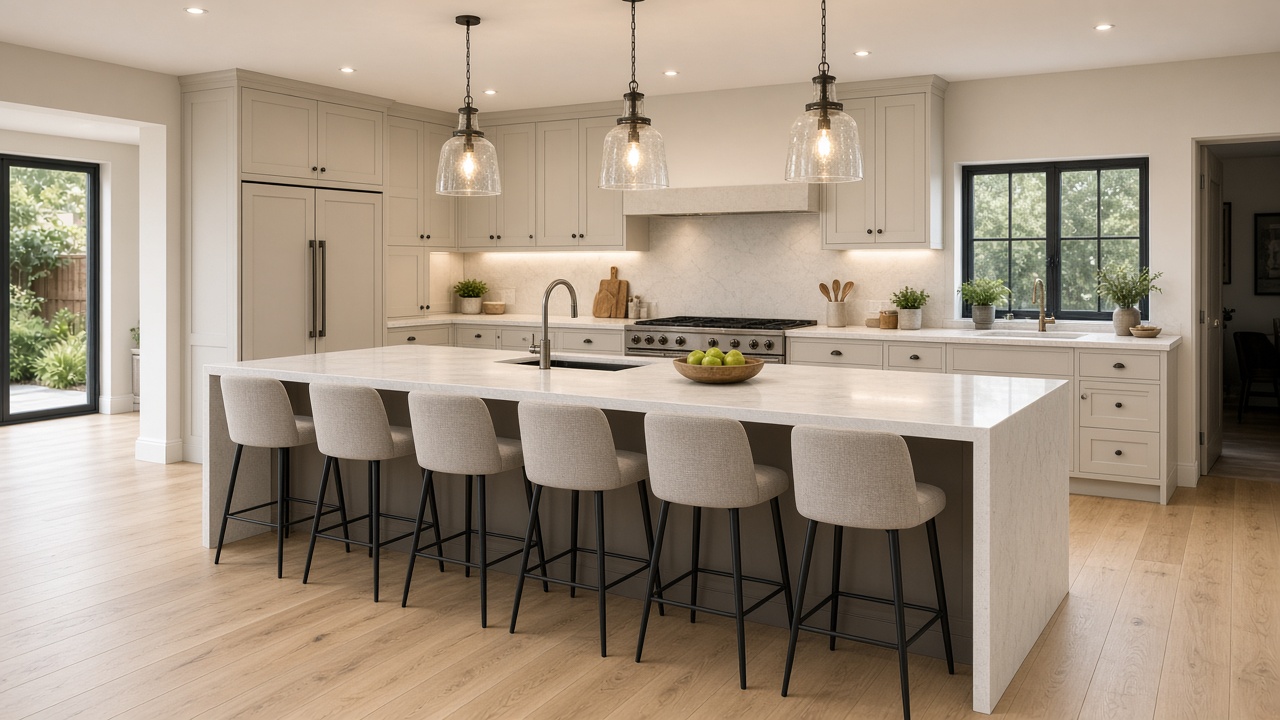
Kitchen island worktops are a separate buying decision from the perimeter run. The island is where guests sit, where you dump shopping, and where photographers look first. London searches spike for waterfall edges, chunky 40mm looks, and whether the island should match or contrast the main worktop.
Structurally, islands also collect sockets, pop-up chargers, wine fridges and overhangs that need steel support. Specify those before the template.
Contents
1 What an island top costs
2 20mm, 30mm and mitred thick edges
3 Overhangs and seating
4 Frequently asked questions
What an island top costs
A simple rectangular quartz island might add £700–£2,000. A large waterfall in premium veined stone can add £2,000–£5,000+ because of extra slab yield, mitred corners and polishing. Book-matching marble-look veins across a waterfall is a craft process, not a free extra.
20mm, 30mm and mitred thick edges
Here are some of the most popular kitchen worktop materials:
True 30mm slabs are heavier. Many UK islands use 20mm material with a mitred apron to look like 40mm or 60mm. That look is fashionable and searches well, but it needs precise fabrication. Square edges remain the most popular profile in UK trend reports.
Overhangs and seating
Plan about 300–350mm per stool and a comfortable overhang (often 250–400mm) with proper brackets or a steel frame. Quartz and granite need more support than people expect. Do not cantilever a thin porcelain slab without engineering advice.
Frequently asked questions
Should the island match the perimeter worktop?
Matching looks calm and expensive. Contrast — for example pale perimeter and a darker island — is a strong 2026 search trend. In small London rooms, matching usually feels larger.
Are waterfall islands practical?
They are stunning and easier to mop around with no plinth dust trap on the ends. They use more material, show floor knocks at the bottom, and need excellent levelling on uneven Victorian floors.
Next step
Ready to compare surfaces for a London kitchen? Request a quote, order a free sample, or browse the full worktop range.