
How to Clean Quartz Worktops: UK Care Guide
A practical UK guide to cleaning quartz kitchen worktops, including hard-water marks common in London and the products that can damage the finish.
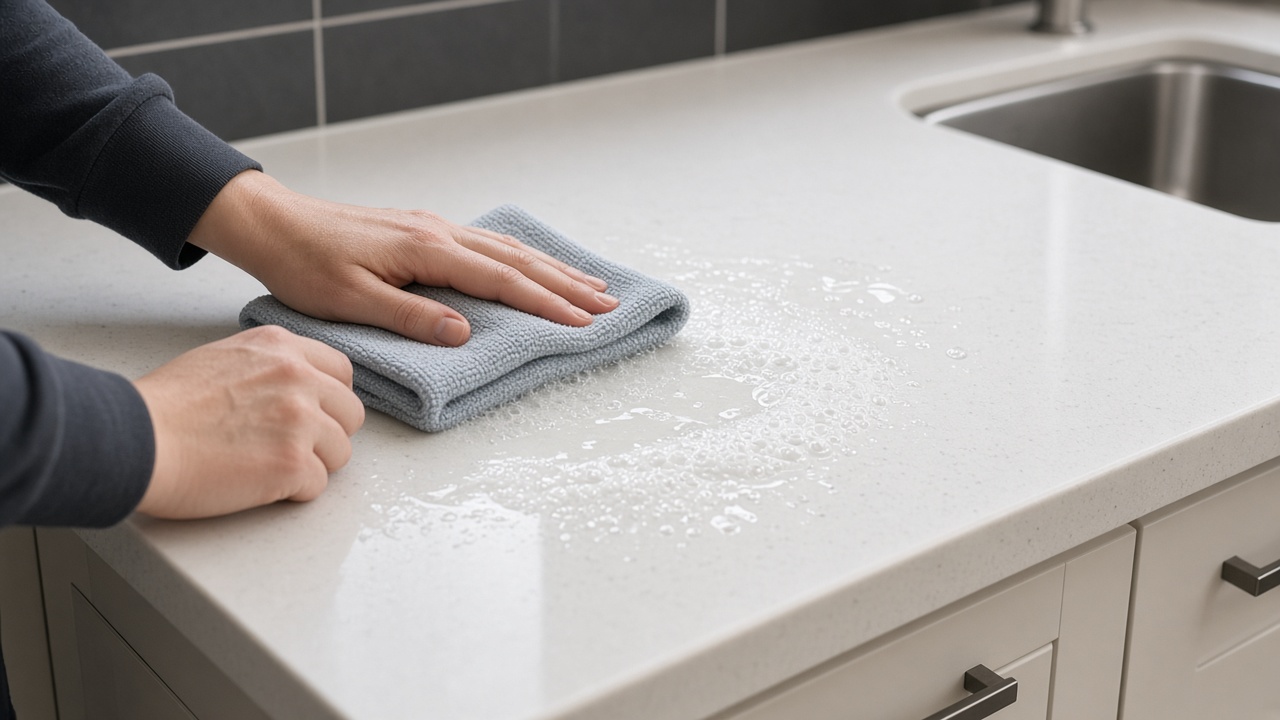
How to clean quartz worktops is a perennial UK search because the material is sold as “maintenance free” — then a kettle leaves limescale rings in hard-water postcodes from Kent to the Thames Valley. Quartz is non-porous and does not need sealing, but the polish can dull if you use the wrong chemistry.
Use this as a household routine, not a restoration manual. Deep scratches and heat marks need a fabricator, not another cream cleaner.
Contents
1 Daily and weekly routine
2 Limescale, turmeric and mystery stains
3 What never to do
4 Frequently asked questions
Daily and weekly routine
Wipe with warm water and a drop of washing-up liquid on a microfibre cloth, then dry to prevent water spots. For greasy film after frying, a dedicated quartz or stone spray (pH-neutral) works well. Dry the area around the tap every evening in hard-water London boroughs.
Limescale, turmeric and mystery stains
Here are some of the most popular kitchen worktop materials:
Do not pour bathroom limescale gel on quartz — many are strongly acidic and can etch the resin. Use a cleaner approved for engineered stone, or a carefully applied limescale product labelled safe for quartz, then rinse. Turmeric, beetroot and marker pens need prompt attention; a non-scratch sponge and a manufacturer-approved cleaner usually lift them.
What never to do
No oven cleaner, no bleach baths, no scouring powders, no leaving a slow cooker or pizza stone blasting heat in one spot, and no cutting directly on the surface. Trivets are cheaper than a replacement slab.
If you prefer a surface that can be sanded if it marks, compare quartz with repairable solid surfaces such as Staron or Corian.
Frequently asked questions
Can I use Flash or Cif on quartz?
Avoid abrasive cream cleaners. Some everyday sprays are too harsh for a polished resin surface. Stick to pH-neutral products and check the quartz brand’s care sheet.
Why has my white quartz gone dull near the sink?
Usually mineral deposits from hard water, or micro-scratching from abrasive pads. Try a quartz-safe limescale method and switch to microfibre. If the polish is gone, a fabricator may be able to re-hone locally — not always.
Next step
Ready to compare surfaces for a London kitchen? Request a quote, order a free sample, or browse the full worktop range.